Licensed Fire Safety Electrical Services in California
Behind every fire alarm panel, every notification appliance, and every detection device lies the electrical infrastructure that makes it all work. At Delta Fire Equipment, our licensed electricians specialize in the unique wiring demands of fire and life safety systems. We understand that fire alarm electrical work is not the same as standard commercial wiring — it requires specialized knowledge of NFPA 72, the California Electrical Code, and the specific requirements of every fire alarm manufacturer we install.
Our electrical team has been supporting fire and life safety installations throughout California since 1987. Whether you need a complete fire alarm wiring installation for a new construction project, a retrofit of existing wiring to support a system upgrade, or troubleshooting of intermittent ground faults and wiring issues, Delta Fire Equipment has the expertise and licensing to get the job done right the first time.
Fire Alarm Wiring & Installation
Fire alarm systems require precise wiring to function reliably when lives are on the line. Our electricians install all classes and styles of fire alarm circuits, including initiating device circuits (IDC), notification appliance circuits (NAC), and signaling line circuits (SLC). We follow the specific circuit supervision requirements of NFPA 72 and the California Fire Code, ensuring that any break, ground fault, or open circuit will immediately be reported as a trouble condition at the fire alarm control panel.
We work with all major fire alarm manufacturers including Notifier, Simplex, EST Edwards, Silent Knight, Fire-Lite, and Gamewell-FCI. Our familiarity with each manufacturer's wiring specifications and panel requirements means your installation will meet both code requirements and manufacturer certifications without costly rework.
Conduit Installation & Routing
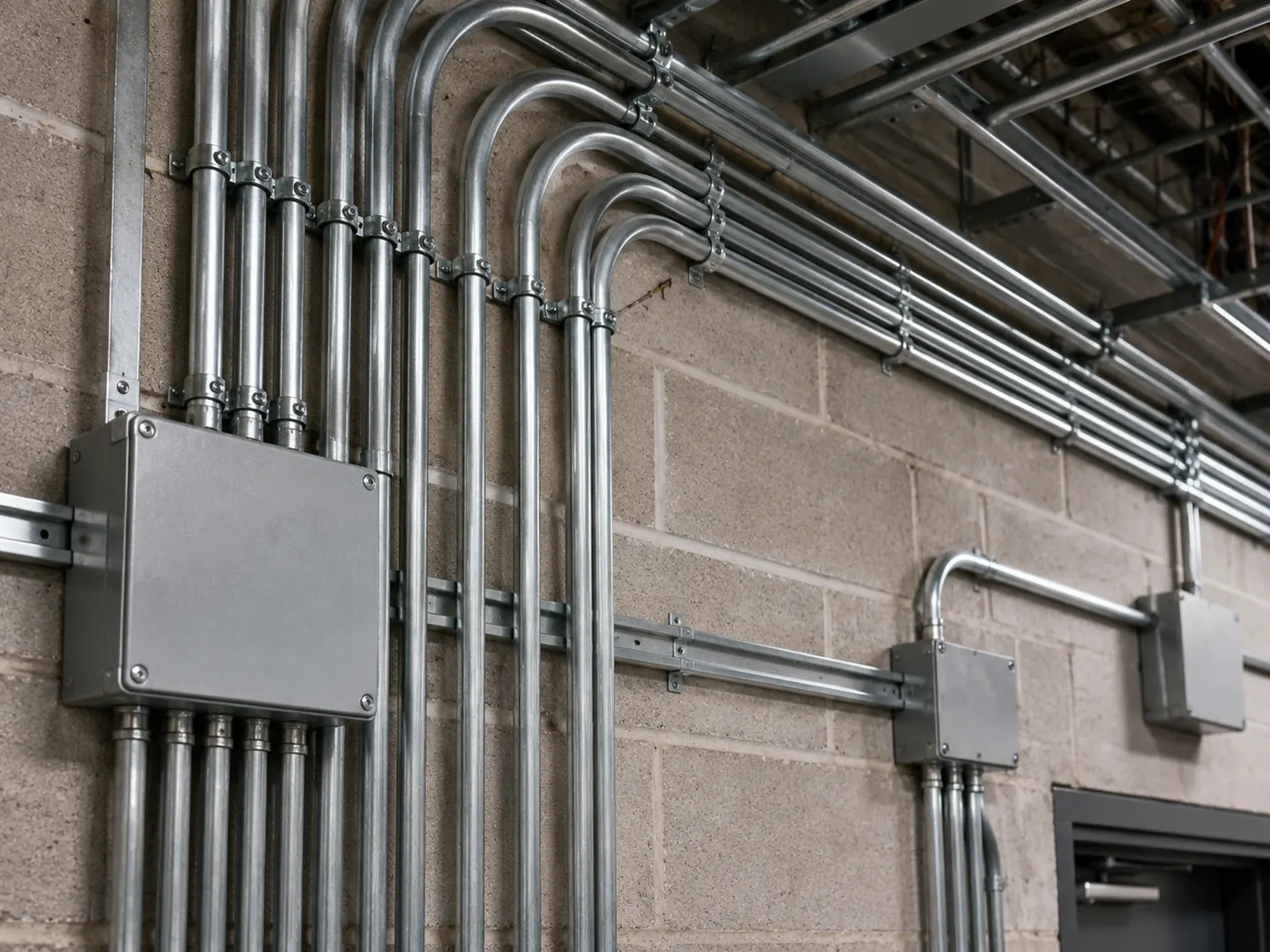
Proper conduit installation protects fire alarm wiring from physical damage, electromagnetic interference, and environmental exposure. Our team installs EMT, rigid metal conduit, flexible metal conduit, and MC cable per the California Electrical Code and local AHJ requirements. We plan conduit routes to avoid interference with other building systems and ensure clean, organized installations that are easy to maintain and inspect.
For retrofit projects, we carefully survey existing conditions to identify the most efficient conduit routing paths that minimize disruption to building operations. We coordinate with general contractors, mechanical trades, and building management to schedule work during off-peak hours when necessary. All conduit work includes proper support, bonding, and grounding per NEC Article 250 and California amendments.
Low-Voltage Systems
Many fire and life safety systems operate on low-voltage circuits that have their own set of code requirements and installation standards. Our low-voltage expertise covers fire alarm systems, access control wiring, intercom systems, emergency communication systems, nurse call systems, and security camera cabling. We install structured cabling using Cat5e, Cat6, and fiber optic media, ensuring that every cable is properly terminated, labeled, and tested.
Low-voltage fire alarm wiring in California requires a C-10 electrical contractor's license or a fire protection contractor's license, and Delta Fire Equipment holds both C-10 electrical and C-16 fire protection licenses (CSLB #977859) to perform this work legally and competently. We never subcontract our fire alarm wiring to unlicensed installers, giving you confidence that every connection meets the standards your AHJ expects.
Panel Terminations & Programming Support
The fire alarm control panel is the brain of your fire protection system, and every wire that enters it must be terminated precisely according to the manufacturer's wiring diagrams. Our electricians perform panel terminations with meticulous attention to detail, ensuring correct polarity, proper torque on terminal screws, and clean wire dressing inside the enclosure. We label every circuit at the panel and at junction boxes throughout the building, creating a wiring infrastructure that is straightforward for future technicians to service.
After physical terminations are complete, we support the programming and commissioning process by verifying end-to-end circuit integrity, measuring voltage and current on every circuit, and performing loop resistance testing on SLC circuits. This electrical verification catches wiring issues before programming begins, saving time and avoiding false alarms during system acceptance testing.
Code-Compliant Electrical Solutions
- NFPA 72 circuit supervision and monitoring requirements
- California Electrical Code (NEC with California amendments) compliance
- Proper conductor sizing, derating, and voltage drop calculations
- UL-listed materials and fittings on every installation
- Complete as-built documentation and wire labeling
- Coordination with AHJ for inspections and approvals